


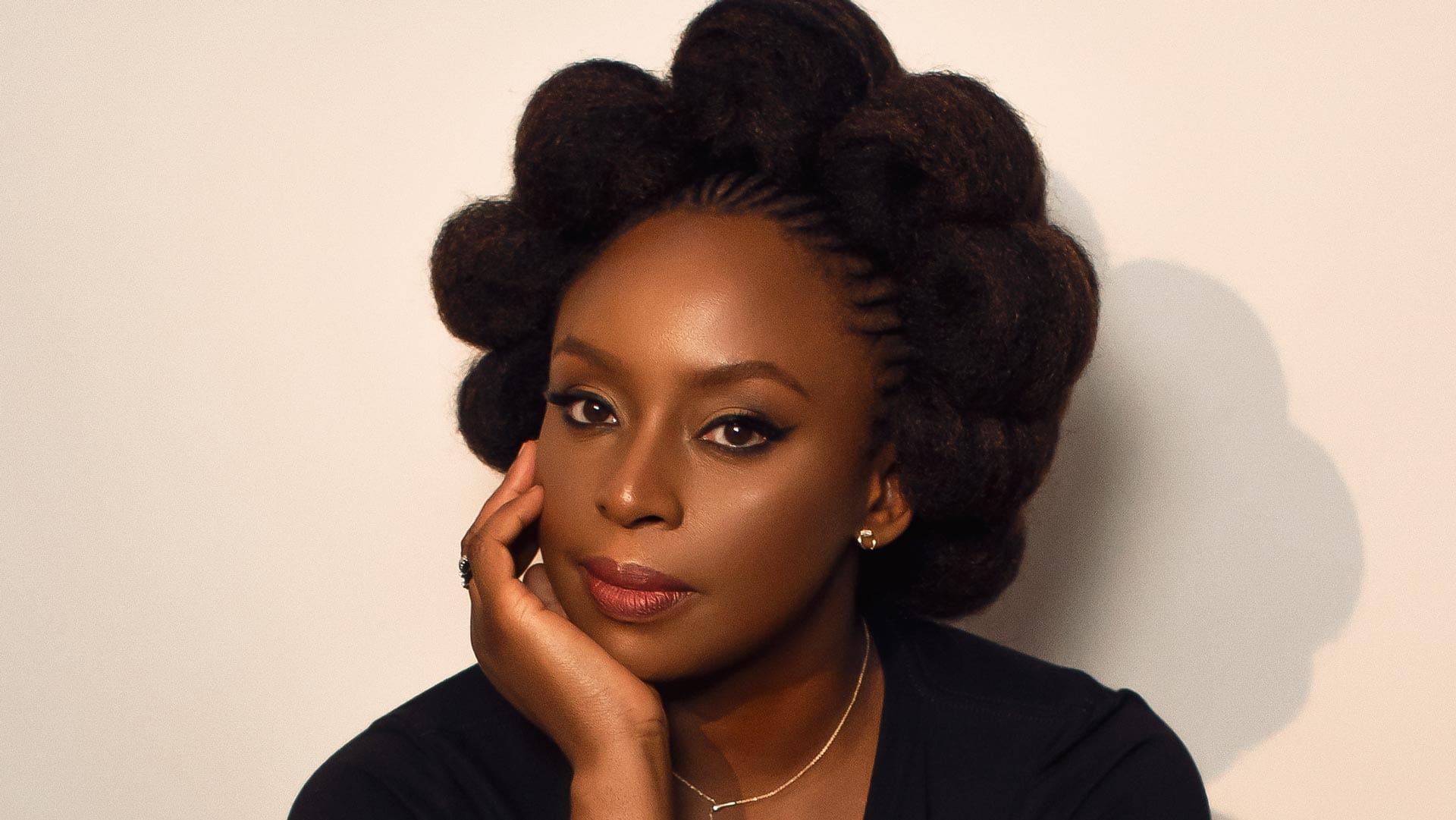
Chimamanda Adichie
Author
Chimamanda Ngozi Adichie, born on 15 September 1977 in Enugu, Nigeria, has become one of the most influential writers and public intellectuals of her generation. Raised on the campus of the University of Nigeria, Nsukka—where her father was a professor, she was surrounded by books and academic conversation from an early age. A voracious reader, she was deeply influenced by African storytellers like Chinua Achebe, whose “Things Fall Apart” she encountered as a young girl. After beginning studies in medicine and pharmacy at the University of Nigeria, Adichie moved to the United States in 1997, earning a BA in communication and political science from Eastern Connecticut State University, a master’s in creative writing from Johns Hopkins University, and further studying African history at Yale University.
Adichie’s literary career took flight with her debut novel “Purple Hibiscus” (2003), which won the Commonwealth Writers’ Prize and established her as a powerful new voice in contemporary fiction. Her second novel, “Half of a Yellow Sun” (2006), brought international acclaim—and a Women’s Prize for Fiction—for its unflinching portrayal of the Nigerian Civil War. Over the years she has continued to challenge and expand literary boundaries with “The Thing Around Your Neck”, (Americanah) (which won the US National Book Critics Circle Award), and her 2025 novel “Dream Count”.
Beyond her novels, Adichie has become a global voice on gender equality, identity, and social justice. Her 2012 TEDx talk “We Should All Be Feminists” was adapted into a book-length essay and has inspired conversations worldwide about feminism, education, and equality. She also wrote “Dear Ijeawele, or A Feminist Manifesto in Fifteen Suggestions”, a guide to raising feminist children that has resonated with readers internationally.
Adichie’s influence extends beyond the page. She is a sought‑after speaker at universities and international forums, using her platform to champion women’s rights, challenge patriarchal norms, and promote cultural understanding. Her advocacy has seen her recognized by institutions like the United Nations Foundation with a Global Leadership Award, underscoring her role not just as an artist but as an advocate for social justice, girls’ education, and literary mentorship.
Adichie’s journey—from a curious child in Nsukka to a global literary and feminist figure—highlights the power of storytelling to reshape conversations about identity, culture, and equality.
While she keeps her family life private, Adichie engages with the public through social media and her official channels, offering insights into her work and views. Readers and followers can connect with her authentic social media handles listed by her official team: